
Power Quality
Most energy strategies focus on how much power is used.
But the quality of that power can have just as much impact on performance, reliability and cost.
Issues like harmonics, voltage fluctuations, transients and load imbalance can quietly affect systems across an estate, often without being detected until something fails.
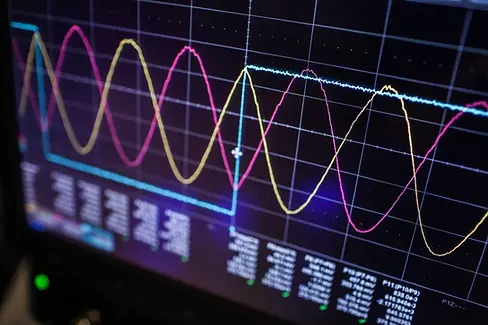
What is Power Quality?
Power quality refers to how stable and consistent the electrical supply is.
It’s not just about having power, it’s about having the right voltage levels, a stable frequency and the correct waveform distortion for equipment to operate efficiently and reliably.
When power quality is poor, these characteristics deviate, impacting performance, operational efficiency and asset lifespan.
Why It Matters
Poor power quality can have a direct impact on operations.
It can lead to:
-
Reduced operational efficiency
-
Increased energy losses
-
Equipment malfunction
-
Shortened asset lifespan
And across an estate, these effects compound.

Common Power Quality Issues
Harmonics
These are waveform distortions at frequencies that are integer multiples of the fundamental frequency, commonly generated by non-linear loads such as variable frequency drives and computer power supplies.
If left unmanaged they cause overheating, increased energy losses and disruption to sensitive equipment.
Voltage Sags & Swells
These are short-term reductions or increases in voltage.
This can cause equipment malfunction, downtime and long-term damage.
Transients
These are brief spikes in voltage & current caused by switching or other external factors.
Can damage equipment, increase maintenance costs and disrupt operations.
Load Imbalance
This is when electrical loads are not evenly distributed across phases.
Leading to inefficiencies, overheating, voltage fluctuations and reduced system performance.
Power Factor
This is a measure of how efficiently power is used.
Poor power factor indicates inefficiency resulting in wasted energy and increases costs.
Why Monitoring is Critical
It is imperative to monitor Power Quality across the entire EPMS, from building point of entry down to individual payloads. Without visibility, Power Quality issues are difficult to identify and even harder to resolve.
Monitoring enables organisations to:
-
Detect issues in real time
-
Mitigate short & long term impacts like intermittent failures, equipment damage and reduction in operational life.
-
Identify trends and recurring problems
-
Diagnose root causes
-
Take targeted corrective action
-
Moving from reactive fixes to proactive management.
Where do Power Quality Issues Come From?
80%
Inside the facility
20%
Outside the facility
48.8%
Electrical Noise & Transients
(63.0 events per month)
39.4%
Spikes & Surges
(50.7 events per month)
11.2%
Sags & Brownouts
(14.4 events per month)
0.4%
Mains Interruption
(0.5 events per month)
How Improves Power Quality

We help organisations gain visibility and control over power quality across their estate.
Through detailed monitoring and analysis, we provide insight into:

Harmonics & Waveform Distortion

Voltage Instability

Hidden Risks & Operational Inefficiencies

Load Imbalance

Mitigating Transient Events
Enabling informed decisions and long term performance improvements.
